Barndominium Builders in Dakota County, Minnesota
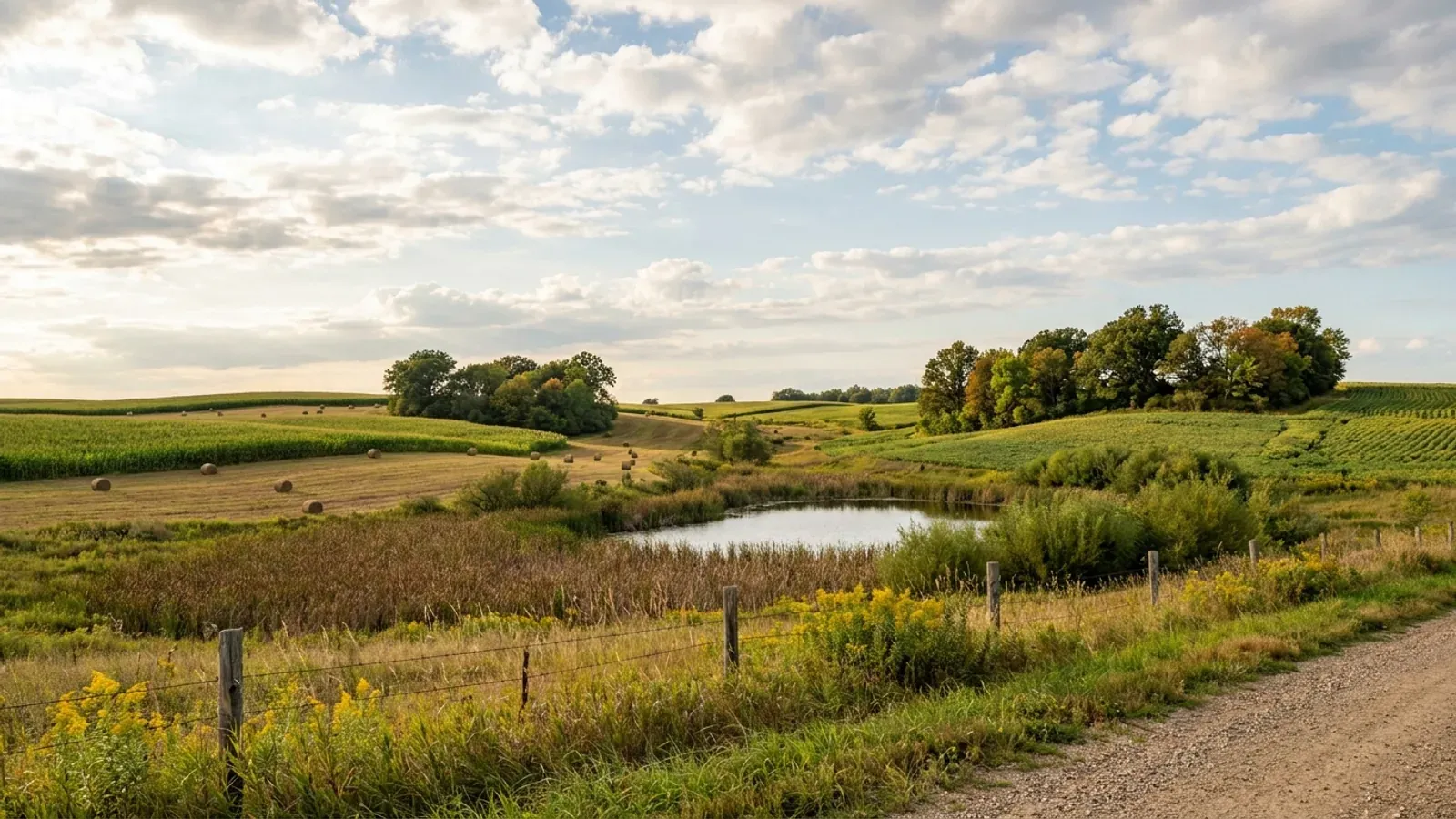
For barndominium builders near Dakota County, the useful split is north and south. The northern half is Eagan, Burnsville, Apple Valley and the other built-out suburbs; the southern half, around Hastings, Farmington and the thirteen townships, is still working farmland along the Mississippi and the Cannon River, and that is where a house-and-shop build has room. What surprises most buyers is that the county does not issue building permits there. Every city and township in the county holds its own zoning authority and issues its own building permits, and each one enforces the State Building Code, so a parcel in Castle Rock Township answers to Castle Rock, not to the county. The county steps in near water, with its shoreland and floodplain ordinance, and runs the septic program for a handful of places. We sell barndominium kits, draw custom plans and build turnkey pole barn and steel-frame homes, and before you buy we will identify which township or city governs the parcel and what its zoning allows.
Dakota County at a glance
- County
- Dakota County
- Building permit
- Township building program
- Land use
- Township zoning
- Wastewater
- Septic (SSTS) via the township
- Frost depth / snow load (state rule)
- 3-1/2 feet / 50 psf
Barndominium Kits & Floor Plans for Dakota County
The parcel decides the budget more than the floor area does, so each option is priced against your land rather than a rate card.
Barndominium Kits
Barndominium kits and shell kits for Minnesota land, sized to your county's state-set snow load and frost depth, with the drawings your permit needs.
Custom Plans
Custom barndominium plans drawn for Minnesota: your layout and shop, your county's snow load and frost depth, and a set ready for plan review.
Barndominium Floor Plans
Stock plans by size and layout, each a starting point adjusted to your parcel.
Pole Barn Homes near Dakota County
A pole barn home sets its frame on posts and trusses (the engineering term is post-frame), which often suits a simple, wide layout with a shop bay under the same roof. Whether it fits your parcel comes down to the zoning and the site, set out below.
Permits, Zoning & Septic in Dakota County
Who issues the permit, who zones the land and who handles septic can change at a city limit or a county line. Here is who decides each part in Dakota County, taken from the office or document that publishes it. Rules change, so check them again against your parcel before anything is drawn.
The township or city where the parcel lies
Dakota County states that all of its cities and townships have land use and zoning authority and that building permits are issued by the city or township, not the county. Cities permit separately inside their limits. For township land, the county also asks owners to check with its Water Resources Department whether the parcel falls under the county shoreland and floodplain ordinance, in which case county permits may be required.
Source: Building and Zoning Permits, Dakota County (dakotacountymn.gov)
Township boards and city planning offices; Dakota County Water Resources for shoreland and floodplain
Townships zone their own land in Dakota County, each with its own districts and lot rules, and cities zone theirs. The county's role is overlay regulation: Ordinance 50 governs shoreland and floodplain areas in the 13 unincorporated townships and requires permits for construction, grading, filling or vegetation removal near public waters and in FEMA-designated floodplain.
Source: Building and Zoning Permits, Dakota County (dakotacountymn.gov)
Each township or city; Dakota County Environmental Resources for its own jurisdiction
Most townships and cities run their own septic (SSTS) permitting and inspection to MPCA rules and County Ordinance 113. The county issues septic permits itself in shoreland areas, in Hastings, Randolph and New Trier, and in Randolph and Waterford townships.
Source: Septic Systems, Dakota County (dakotacountymn.gov)
In Dakota County, 34 of the 34 cities and townships in DLI's State Building Code Jurisdiction Directory have adopted the State Building Code, including Apple Valley, Burnsville, Coates, Eagan, Empire, Farmington; elsewhere the county's zoning, shoreland and septic rules still apply.
Source: State Building Code Jurisdiction Directory (Local Code Lookup), Minnesota Department of Labor and Industry (secure.doli.state.mn.us), read 27 September 2026. Check it again for your parcel, then call that office.
- Frost footing depth
- 3-1/2 feet (frost Zone II), unless an engineer competent in soil mechanics determines otherwise.
- Ground snow load
- 50 pounds per square foot of ground snow load, the starting point for the structure's snow design.
Source: Minn. R. 1303.1600, Footing Depth for Frost Protection (revisor.mn.gov)
Source: Minn. R. 1303.1700, Ground Snow Load (revisor.mn.gov)
- County shoreland and floodplain ordinance
- Dakota County Ordinance 50 applies to shoreland and floodplain areas in the county's 13 unincorporated townships, and its shoreland provisions include land inside the Cannon River Scenic and Recreational River district; the ordinance was first passed in 1973 and last amended on 6 September 2022.
- New septic systems in the county's jurisdiction
- Where Dakota County issues septic permits, a licensed septic designer prepares the design with two separate soil verifications and a site plan before the permit application; a final inspection is required before the system is covered, and the county needs the installer's signed as-built record before issuing a certificate of compliance (read 27 Sep 2026).
- Township density example: Eureka Township
- Eureka Township limits residential use in every zone to one single-family dwelling per quarter-quarter section, requires a housing right eligibility permit from its Zoning Administrator before a building permit, and sets a 2-acre minimum parcel with 250 feet of width at the house (Town Code ch. 240, Article III, read 27 Sep 2026).
Source: Dakota County Shoreland and Floodplain Management Ordinance 50 (dakotacountymn.gov)
Source: Septic System Construction or Replacement, Dakota County (dakotacountymn.gov)
Source: Article III: Residential Buildable Lots, Township of Eureka Code (ecode360.com)
Turnkey Builds
Turnkey barndominium builds in Minnesota: land check, plans, permits, foundation, frame and finish under one agreement, from raw land to move-in.
Site Preparation
Barndominium site preparation in Minnesota: shoreland and septic checks first, then clearing, grading, the driveway and a pad for frost-depth footings.
Permits & Approvals
Barndominium permits in Minnesota: who enforces the building code on your parcel, and the zoning, septic and well approvals that apply everywhere.
Metal Building Homes & Shouses near Dakota County
A steel frame instead of posts, or a home and a workshop under one roof: the same parcel questions apply, so start from the rules above.
Metal Building Homes
Metal building homes in Minnesota, insulated and air-sealed for a long winter, with condensation and radon handled before the walls close in.
Shouses
Shouses in Minnesota: a heated shop and a home under one roof, laid out for big doors, winter work and the separation a house needs from its shop.
Steel & Metal Building Construction
Red-iron steel frames for Minnesota barndominiums and shops: wide clear spans, roofs sized to your county's snow load, columns on frost-depth footings.
Building on land near Dakota County
Township farmland in this county is zoned by each township, so lot sizes, density and whether a large accessory building is allowed differ from one town board to the next; ask for the township's zoning ordinance before you make an offer. Eureka Township, for example, allows one home per quarter-quarter section and requires a housing right before it will take a building application. Near public waters (shoreland generally reaches 1,000 feet from a lake and 300 feet from a river) or in mapped floodplain along the Mississippi or the Cannon, county Ordinance 50 adds a permit and setbacks, and the county handles floodplain determinations. Most rural parcels need a septic system, permitted by the township unless the land is in the county's septic jurisdiction. Buyers who want a city address instead can compare the Lakeville page, and the Scott County page covers the county-zoned townships to the west.
Other places in this part of Minnesota
Minneapolis–St. Paul & the Twin Cities Metro
Have land in or near Dakota County? Tell us about the parcel and what you want on it, and we will check it against the local rules before anything is drawn.
Building in Dakota County: questions
Start the surveyHow much does it cost to build a barndominium near Dakota County?
Do I need a building permit for a barndominium in Dakota County?
Who decides whether I can build a pole barn home on Dakota County farmland?
Who permits a septic system for a new home in Dakota County?
Keep reading
What usually comes next once you know what Dakota County allows.
Barndominium Cost Guide
Sourced per-square-foot ranges by tier and size, and what moves the number on your land.
Read itIs a Barndominium Legal in Minnesota?
Zoning, permits, septic and who inspects, before you buy the land.
Read itHow Long Does It Take?
From parcel to move-in, and which steps set the clock.
Read itSources for this page
The published pages behind the Dakota County facts above. Rules change, so check the current version with the office before you rely on it.
- Building and Zoning Permits, Dakota CountyBuilding permit authority; Land use and zoningdakotacountymn.gov
- Septic Systems, Dakota CountySewer or septic (SSTS)dakotacountymn.gov
- Dakota County Shoreland and Floodplain Management Ordinance 50County shoreland and floodplain ordinancedakotacountymn.gov
- Septic System Construction or Replacement, Dakota CountyNew septic systems in the county's jurisdictiondakotacountymn.gov
- Article III: Residential Buildable Lots, Township of Eureka CodeTownship density example: Eureka Townshipecode360.com
- State Building Code Jurisdiction Directory (Local Code Lookup), Minnesota Department of Labor and IndustryState Building Code adoptionsecure.doli.state.mn.us
- Minn. R. 1303.1600, Footing Depth for Frost ProtectionFrost footing depth by countyrevisor.mn.gov
- Minn. R. 1303.1700, Ground Snow LoadGround snow load by countyrevisor.mn.gov
Other places near Dakota County
Nearby places with their own pages. Across a city limit or a county line the permit office, the zoning and the septic rules can change, so each is covered separately.
Building in Dakota County?
Start with the survey. Tell us where the land is and what you want on it, and we will come back with which offices decide it, what the zoning allows, and a plan to fit.