Barndominium Builders in Olmsted County, Minnesota
Barndominium builders near Olmsted County work in one of the most carefully zoned rural counties in southern Minnesota. The farmland that surrounds Rochester, Byron, Stewartville, Chatfield and Eyota is productive, and the county's agricultural districts ration new non-farm homes by the quarter-section, so the building eligibility attached to a parcel matters as much as its price. We build pole barn homes, steel-frame barndominiums and shouses here, sell barndominium kits to owner-builders, and deliver turnkey projects with the site work and permit paperwork handled for you. What makes Olmsted County unusual is how many offices can be involved. The county describes itself as eighteen townships and eight cities that each run zoning and the building code in their own way. The county's own inspectors cover some of those places, a township planning association covers most townships, and a city such as Rochester runs its own departments. The county offers an address lookup that names the right contacts. Give us the parcel and we will work out, before anything is drawn, whose zoning certificate, building permit and septic permit your barndominium needs.
Olmsted County at a glance
- County
- Olmsted County
- Building permit
- County or township, by location
- Land use
- More than one zoning authority
- Wastewater
- Septic (SSTS) via the county
- Frost depth / snow load (state rule)
- 3-1/2 feet / 50 psf
Barndominium Kits & Floor Plans for Olmsted County
The parcel decides the budget more than the floor area does, so each option is priced against your land rather than a rate card.
Barndominium Kits
Barndominium kits and shell kits for Minnesota land, sized to your county's state-set snow load and frost depth, with the drawings your permit needs.
Custom Plans
Custom barndominium plans drawn for Minnesota: your layout and shop, your county's snow load and frost depth, and a set ready for plan review.
Barndominium Floor Plans
Stock plans by size and layout, each a starting point adjusted to your parcel.
Pole Barn Homes near Olmsted County
A pole barn home sets its frame on posts and trusses (the engineering term is post-frame), which often suits a simple, wide layout with a shop bay under the same roof. Whether it fits your parcel comes down to the zoning and the site, set out below.
Permits, Zoning & Septic in Olmsted County
Who issues the permit, who zones the land and who handles septic can change at a city limit or a county line. Here is who decides each part in Olmsted County, taken from the office or document that publishes it. Rules change, so check them again against your parcel before anything is drawn.
Olmsted County Planning Department, Inspections Division (county building official), or the city or township office for other areas
The county building official administers the code in the cities of Byron, Chatfield, Eyota and Stewartville and in Eyota, Marion and Quincy townships. In the townships that belong to the Township Cooperative Planning Association, its staff issue building permits; other cities have their own arrangements, and Rochester permits separately. The county's jurisdiction lookup names the building permit contact for any address.
Source: Building, Well, & Septic, Olmsted County (olmstedcounty.gov)
Olmsted County Planning Department, or the Township Cooperative Planning Association
County Planning administers zoning in Eyota, Marion, Oronoco and Quincy townships. Farmington, Kalmar, Cascade, Haverhill, New Haven, Salem, Rochester, Dover, Rock Dell, High Forest, Pleasant Grove, Orion and Elmira townships get zoning certificates from the Township Cooperative Planning Association. Agricultural A-1 and A-2 districts cover much of the rural land, and the county is rewriting its zoning and subdivision ordinances.
Source: Planning, Land Use, & Zoning, Olmsted County (olmstedcounty.gov)
Olmsted County Inspections (SSTS Ordinance, Chapter 3400), or the township's own program
Olmsted County Inspections permits and inspects new septic (SSTS) systems under its SSTS Ordinance, Chapter 3400, and MPCA rules for Eyota, Marion and Quincy townships and for cities without their own ordinance. In the planning association's member townships, GGG Engineering is the septic permitting entity, so check which applies to your parcel.
Source: Subsurface sewage treatment systems, Olmsted County (olmstedcounty.gov)
In Olmsted County, 26 of the 27 cities and townships in DLI's State Building Code Jurisdiction Directory have adopted the State Building Code, including Byron, Chatfield, Dover, Eyota, Oronoco, Pine Island; elsewhere the county's zoning, shoreland and septic rules still apply.
Source: State Building Code Jurisdiction Directory (Local Code Lookup), Minnesota Department of Labor and Industry (secure.doli.state.mn.us), read 27 September 2026. Check it again for your parcel, then call that office.
- Frost footing depth
- 3-1/2 feet (frost Zone II), unless an engineer competent in soil mechanics determines otherwise.
- Ground snow load
- 50 pounds per square foot of ground snow load, the starting point for the structure's snow design.
Source: Minn. R. 1303.1600, Footing Depth for Frost Protection (revisor.mn.gov)
Source: Minn. R. 1303.1700, Ground Snow Load (revisor.mn.gov)
- Non-farm homes in the agricultural districts
- The Olmsted County Zoning Ordinance (Chapter 1400, updated January 2023 and August 2024) allows no more than one non-farm lot per quarter section in the A-1 district and one per quarter-quarter section in A-2, and each non-farm lot must contain at least one acre of non-prime soils with a crop equivalent rating of 55 or less.
- Township Cooperative Planning Association
- TCPA, formed in May 1997, serves 14 member townships and one associate township. Its staff take zoning, conditional use and variance applications and issue all building permits for members, GGG Engineering of Chatfield permits and inspects septic systems for them, and each member township's ordinance must be as strict as or stricter than the county's (TCPA, read September 2026).
Source: Olmsted County Zoning Ordinance, Code of Ordinance Chapter 1400 (olmstedcounty.gov)
Source: About, Township Cooperative Planning Association (TCPA) (tcpamn.org)
Turnkey Builds
Turnkey barndominium builds in Minnesota: land check, plans, permits, foundation, frame and finish under one agreement, from raw land to move-in.
Site Preparation
Barndominium site preparation in Minnesota: shoreland and septic checks first, then clearing, grading, the driveway and a pad for frost-depth footings.
Permits & Approvals
Barndominium permits in Minnesota: who enforces the building code on your parcel, and the zoning, septic and well approvals that apply everywhere.
Metal Building Homes & Shouses near Olmsted County
A steel frame instead of posts, or a home and a workshop under one roof: the same parcel questions apply, so start from the rules above.
Metal Building Homes
Metal building homes in Minnesota, insulated and air-sealed for a long winter, with condensation and radon handled before the walls close in.
Shouses
Shouses in Minnesota: a heated shop and a home under one roof, laid out for big doors, winter work and the separation a house needs from its shop.
Steel & Metal Building Construction
Red-iron steel frames for Minnesota barndominiums and shops: wide clear spans, roofs sized to your county's snow load, columns on frost-depth footings.
Building on land near Olmsted County
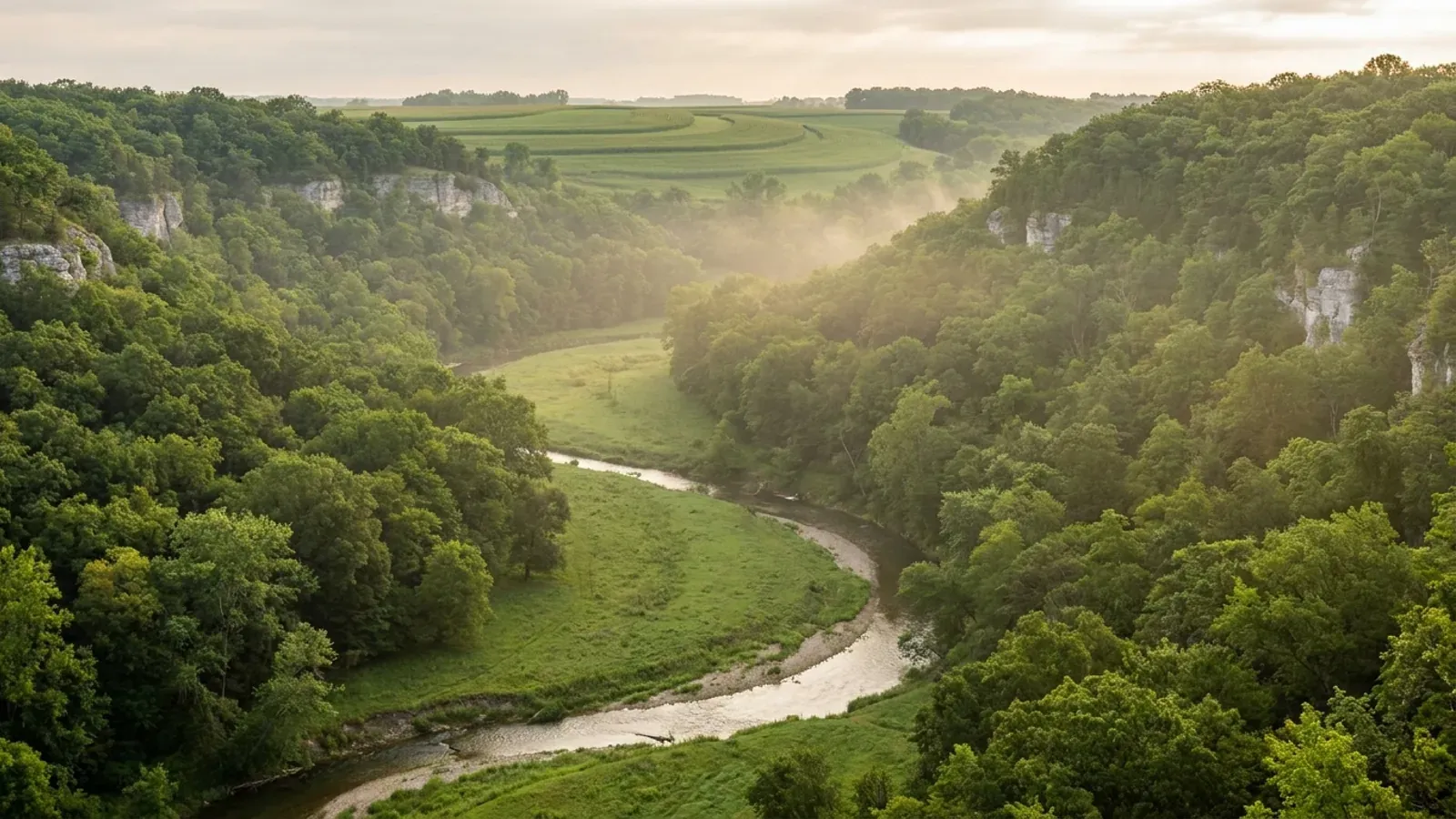
Rural Olmsted County is rolling cropland cut by the Zumbro River and its branches, and the best building sites are often the non-farm lots the zoning rules allow on poorer soils rather than on the prime fields. Before you buy, confirm the parcel still carries a building right: once a quarter-section has its non-farm lot, the A-1 and A-2 districts allow no more. Township ordinances can add their own standards, wells need a county permit, and every rural home needs a septic site that works for its soils. If you would rather build on a city lot with sewer, the Rochester page covers the city's rules, and the Goodhue County page covers the county to the north.
Other places in this part of Minnesota
Rochester & Southeast Minnesota
- Rochester
- Winona
- Owatonna
- Faribault
- Olmsted County
- Goodhue County
- Rice County
Have land in or near Olmsted County? Tell us about the parcel and what you want on it, and we will check it against the local rules before anything is drawn.
Building in Olmsted County: questions
Start the surveyHow much does it cost to build a barndominium in Olmsted County?
Do I need a building permit for a barndominium in Olmsted County?
Can I build a barndominium on farmland in Olmsted County?
Who permits the septic system for a rural home here?
Keep reading
What usually comes next once you know what Olmsted County allows.
Barndominium Cost Guide
Sourced per-square-foot ranges by tier and size, and what moves the number on your land.
Read itIs a Barndominium Legal in Minnesota?
Zoning, permits, septic and who inspects, before you buy the land.
Read itHow Long Does It Take?
From parcel to move-in, and which steps set the clock.
Read itSources for this page
The published pages behind the Olmsted County facts above. Rules change, so check the current version with the office before you rely on it.
- Building, Well, & Septic, Olmsted CountyBuilding permit authorityolmstedcounty.gov
- Planning, Land Use, & Zoning, Olmsted CountyLand use and zoningolmstedcounty.gov
- Subsurface sewage treatment systems, Olmsted CountySewer or septic (SSTS)olmstedcounty.gov
- Olmsted County Zoning Ordinance, Code of Ordinance Chapter 1400Non-farm homes in the agricultural districtsolmstedcounty.gov
- About, Township Cooperative Planning Association (TCPA)Township Cooperative Planning Associationtcpamn.org
- State Building Code Jurisdiction Directory (Local Code Lookup), Minnesota Department of Labor and IndustryState Building Code adoptionsecure.doli.state.mn.us
- Minn. R. 1303.1600, Footing Depth for Frost ProtectionFrost footing depth by countyrevisor.mn.gov
- Minn. R. 1303.1700, Ground Snow LoadGround snow load by countyrevisor.mn.gov
Other places near Olmsted County
Nearby places with their own pages. Across a city limit or a county line the permit office, the zoning and the septic rules can change, so each is covered separately.
Building in Olmsted County?
Start with the survey. Tell us where the land is and what you want on it, and we will come back with which offices decide it, what the zoning allows, and a plan to fit.